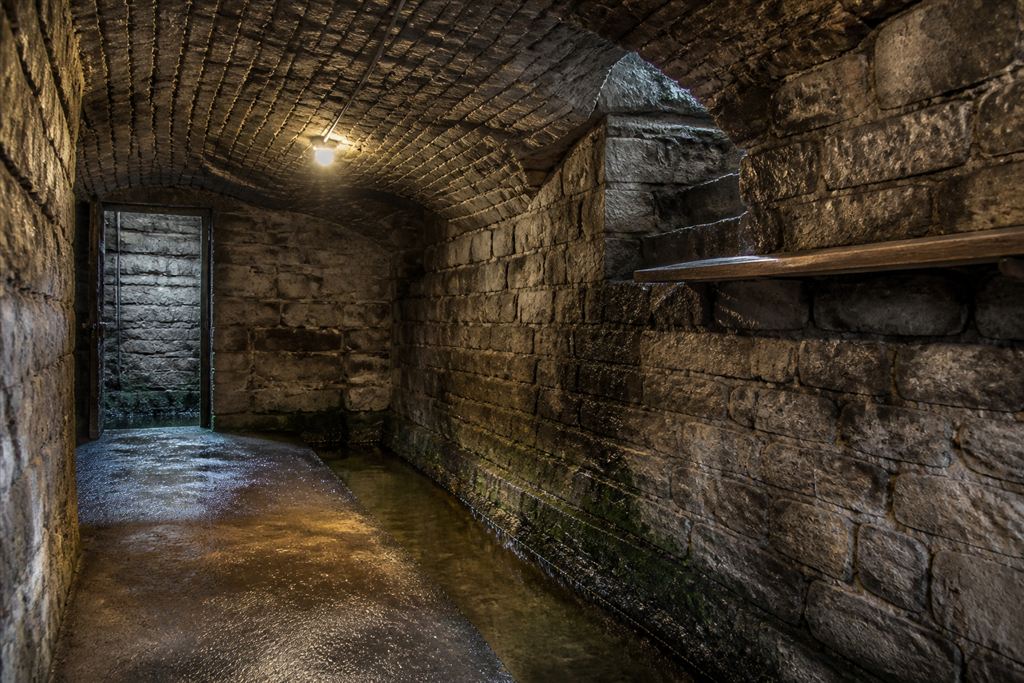
BS 8102 in the language of a Bingley cellar
BS 8102’s three types were not written for a town with a river *and* a perched canal. Here is how they land on Bingley stock anyway:
- Type A sticks a barrier on the wall (slurry, sheet, tanking membrane as a product). Textbook-fine. On valley-floor masonry that still sees Aire groundwater or canal seepage, the barrier takes the head of water and fails at the joint, at mixed millstone/brick, and at a goit-soaked flag. The failed-coat version lives on cellar tanking.
- Type B is waterproof concrete as structure. New-build. Not Park Road, not Myrtle Park stone, not a 1930s Priestthorpe semi.
- Type C lets water arrive, gives it a cavity, collects it, pumps it — if the drain will still take it. The wall can be wet; the room is not. On this domain, cellar waterproofing systems in Bingley means Type C unless the survey says otherwise.
Cavity drain membrane (350 ) is the dimpled plastic on the inside face. Newton ranks for that phrase as a manufacturer. We are not Newton. We specify a membrane as part of a job, we do not sell rolls.
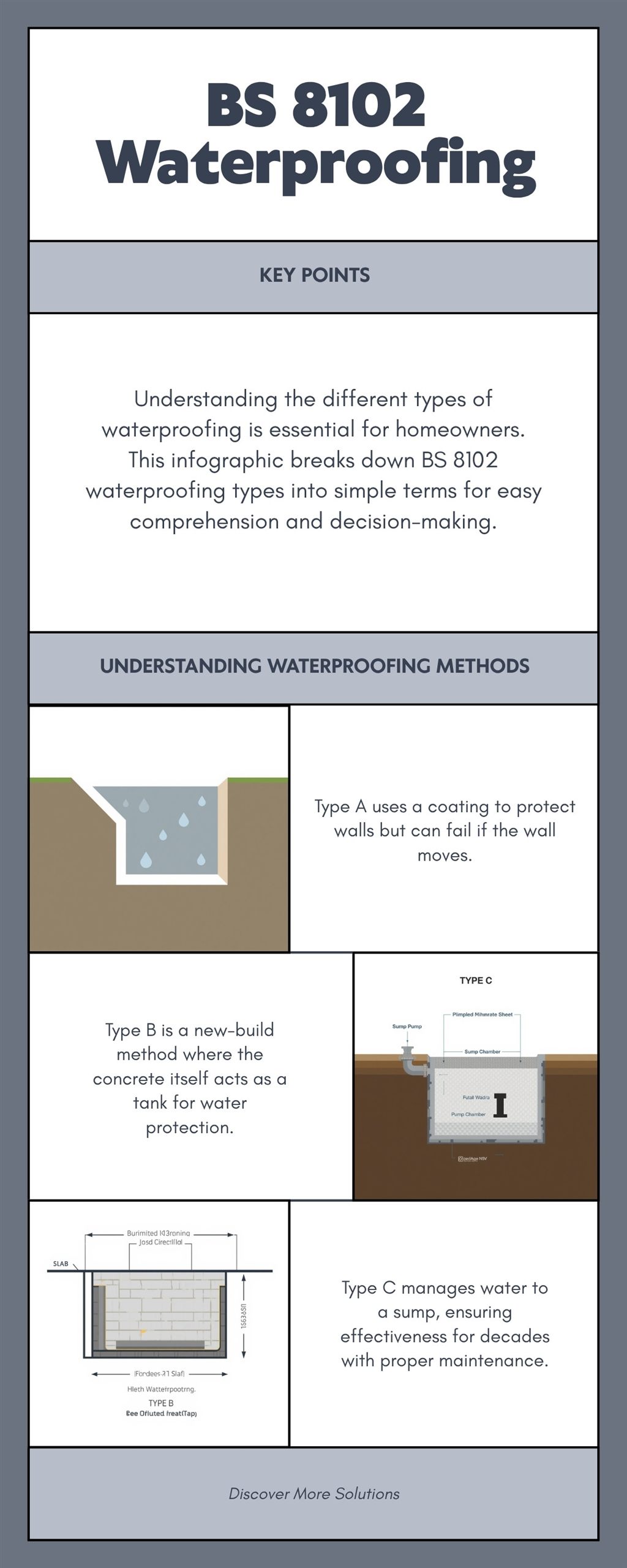
Diagram — BS 8102 types in plain English. Illustrative, not a site photo.
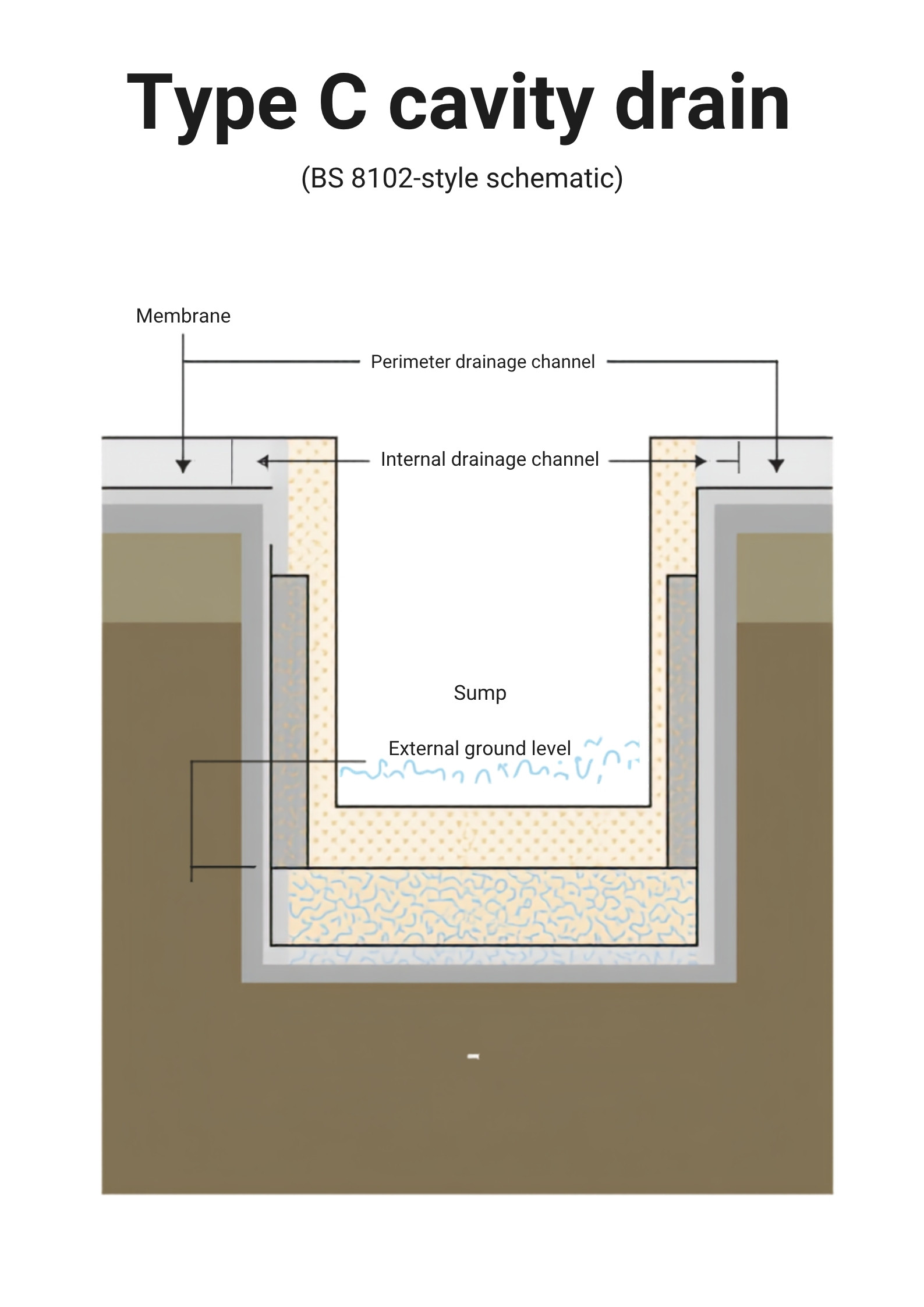
Diagram — how a Type C cavity drain system works. Illustrative, not a site photo.
Where the water goes on this plot type
Type C is only as honest as the discharge.
Valley floor (Ireland Bridge, Myrtle Park, mill strip, Crossflatts, Five Rise side). The existing combined drain is the usual outfall. In a river event that drain can already be full. The survey records invert, whether a non-return is present or needed, and whether a battery backup on the sump is a flood-history decision rather than a nice extra. We do not discharge to the canal. We do not invent a soakaway in alluvium that is already wet.
Uphill (Eldwick, Gilstead, Priestthorpe, Lady Lane, Crownest Lane). Discharge is usually a quiet run to the rear combined drain. The pump is small. You still need it because Type C drains; you do not need it because Five Rise is in your garden.
Goit plots. If a buried mill leat is still feeding the floor on Dubb Lane or Wellington Street, Type C manages the water in the room; it does not “fix the goit” as a land-drainage contract. The survey says which job is which.
What Type C does not do
It does not make a mill-terrace cellar into a showroom by itself. It does not replace a flooded-cellar first response when there is standing water today. It does not skip Bradford Building Control. It does not let us skip the party wall on a Park Road terrace. Conversion finishes sit on it later — after the cellar is dry — they are not this page.